AGE OF CENOZOIC | Trello
Age of Cenozoic is an exciting upcoming animal survival game on Roblox that pushes the boundaries of realism and player immersion. The game introduces a wide range of groundbreaking features, including detailed diet systems, dynamic fishing mechanics, and highly advanced animal AI that reacts naturally to the world around it. Players can choose from an extensive roster of animals, each with its own strengths, weaknesses, behaviors, and ecological roles.As you explore vast, beautifully crafted environments, you’ll experience complex social structures inspired by real-world scientific research, from cooperative pack behaviour to territorial conflicts and intricate family dynamics. Whether you thrive as a lone predator, survive as a cautious herbivore, or build bonds within your group, Age of Cenozoic offers a deep, evolving world where every choice shapes your journey.
This trello is the animal one!
Woolly Mammoth

A woolly mammoth was a massive Ice Age elephant known for its long curved tusks and thick shaggy coat. It lived in cold northern regions, where its dense fur and layer of insulating fat helped it survive harsh climates. This animal roamed open grasslands in large family groups, using its tusks to dig through snow in search of grasses and shrubs. Despite its size, it was a gentle grazer that played an important role in shaping the ancient tundra landscape. Woolly mammoths were impressive creatures with a powerful build and a dense covering of long fur that protected them from freezing winds. Their humps stored fat reserves that provided energy during scarce winter months, and their enormous tusks grew throughout their lives, sometimes reaching extraordinary lengths. These tusks were not only tools for survival but also symbols of maturity and strength.Their daily lives revolved around constant movement across vast plains in search of food. Mammoths relied on grasses, sedges, and small shrubs to sustain their large bodies, often traveling great distances as seasons changed. Their sense of smell guided them to patches of vegetation buried beneath layers of snow, and they used their strong trunks to gather food with remarkable precision.Within their own herds, mammoths displayed structured social behavior led by experienced matriarchs. These leaders guided the group to feeding grounds, sheltered valleys, and safe travel routes. Young mammoths learned vital survival skills by observing adults, while protective mothers remained attentive and gentle with their calves. Cooperation and stability were essential to the herd’s wellbeing.In the presence of other animals, woolly mammoths typically behaved calmly, maintaining peace unless threatened. Their large size discouraged most predators, though fierce creatures such as ancient large cats and packs of dire wolves occasionally tested the herd. When confronted, mammoths stood together in tightly formed circles with calves in the center, using their tusks and weight to warn off any danger. They coexisted with many grazing species and often tolerated them within shared feeding areas as long as resources remained plentiful.Mammoths also interacted with herds of bison, horses, and giant deer that roamed the same landscapes. While these species did not mix socially, their proximity was common as they traveled along similar migratory paths. Mammoths often took the lead when moving through deep snow, creating easier routes for other animals that followed behind. This unspoken relationship shaped the movement of entire ecosystems and revealed how influential mammoths were in the world they once dominated.
Columbian Mammoth

The Columbian mammoth was one of the largest mammoth species to ever roam North America, towering over most ancient creatures with its long curving tusks and impressive height. Its coat was much less dense than that of the woolly mammoth since it lived in warmer and more varied environments. Broad, powerful limbs supported its massive frame as it moved across open grasslands, woodlands, and dry plains.This giant herbivore spent much of its time searching for food, relying on a diet that included grasses, leaves, shrubs, and even the bark of young trees. Its strong trunk allowed it to pull down branches and strip vegetation with ease. Seasonal changes shaped its movements, and herds often migrated to find fresh growth or reliable water sources when dry periods arrived.Columbian mammoths lived in organized family groups that were usually guided by experienced matriarchs. These leaders remembered important travel routes, safe resting places, and the locations of dependable food. Calves were raised with care and learned essential survival habits by staying close to older relatives. The social bonds within a herd were strong and helped every member thrive in challenging landscapes.Around other animals, Columbian mammoths were generally calm and confident due to their immense size. They shared their territory with ancient horses, camels, bison, and giant ground sloths, often grazing near them without conflict. Predators such as large cats and dire wolves rarely attempted to challenge a healthy adult, but if a threat approached the herd, the mammoths would form defensive positions with calves safely shielded. Their presence shaped the behavior of other species, and smaller animals often followed mammoth trails that cleared vegetation and opened pathways.Although they did not form mixed social groups with other species, their movements influenced the entire ecosystem. When Columbian mammoths traveled, they created wide routes through thick vegetation that improved access to feeding grounds for many animals. Their feeding habits helped shape plant communities by thinning young trees and encouraging new growth on open plains. Through their daily actions, these colossal mammals played a major role in maintaining the balance of the environments they inhabited.
Coati
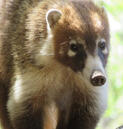
The coatimundi, often called a coati, is a lively and intelligent member of the raccoon family found throughout Central and South America. It has a slender body, a long tail marked with contrasting rings, and a flexible snout that helps it forage with impressive precision. Its sharp claws and agile limbs make it an excellent climber capable of navigating trees with ease.Coatis are omnivores and spend much of their time searching for fruits, insects, eggs, and small vertebrates. Their sensitive noses can detect food hidden under leaves or logs, and they use their strong forelimbs to dig through soil and debris. They are active during the day which makes them stand out from many of their nocturnal relatives.Social interaction is a major part of a coati’s life. Females and their young form lively groups that can number more than a dozen individuals. Within these bands, coatis groom one another, communicate through chirps and trills, and move together in a coordinated fashion while foraging. Young coatis learn vital skills by watching and imitating older members of the group.When interacting with other animals, coatis are cautious but curious. Larger predators such as jaguars and big snakes pose real danger, so coatis rely on alarm calls and rapid climbing to escape threats. They often share territory with creatures like monkeys, birds, and various small mammals, and although they do not form close bonds with these species, they are tolerant as long as resources remain abundant.Coatis influence their environment in subtle but important ways. As they dig for insects or roots they stir up soil which promotes plant growth. Their taste for fruit makes them useful seed dispersers who carry plant life across forests and open woodlands. Through their daily movement and foraging behavior, coatimundis help maintain the health and diversity of the ecosystems they call home.
Coyote
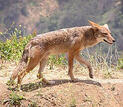
The coyote is a highly adaptable canine native to North America, known for its intelligence, resourcefulness, and remarkable ability to thrive in a wide range of habitats. Its slender build, alert ears, and bushy tail give it a distinctive appearance, while its sharp senses allow it to navigate landscapes from deserts and forests to grasslands and even urban areas. Coyotes are extremely vocal and communicate through a variety of yips, barks, and howls that help maintain contact with other members of their group.
Food availability shapes much of a coyote’s daily activity. Coyotes are opportunistic omnivores that hunt small mammals, birds, and reptiles while also consuming fruits, insects, and carrion when available. Their quick reflexes and endurance allow them to chase down prey, and their ability to switch diet based on season and environment makes them exceptionally resilient. They often travel long distances in search of food and adapt their hunting techniques to whatever the terrain demands.
Social behavior varies widely among coyotes. Some individuals live alone, especially males that roam between territories, while others form small family groups led by a mated pair. Within these families, adults cooperate to raise pups by sharing food and teaching young coyotes essential survival skills. Pups learn to hunt by observing adults, gradually becoming more independent as they grow and explore the boundaries of their territory.
Coyotes interact with many other animals in interesting ways. They frequently share space with deer, foxes, raccoons, and birds of prey, and although they remain alert around these species, they generally avoid direct confrontation unless competing for food. Larger predators like wolves, mountain lions, and bears can threaten coyotes, so they remain cautious and use their speed and awareness to stay safe. Their ability to gauge the behavior of other animals helps them decide when to stand their ground and when to retreat.
Through their movements and feeding habits, coyotes play an important role in maintaining ecosystem balance. By hunting rodents and small herbivores they help control populations that might otherwise grow too large. Their scavenging habits also aid in cleaning up carrion that would attract disease. As they travel across landscapes, coyotes shape the behavior of other wildlife and contribute to the overall health and stability of the environments they inhabit.
Collared Peccary
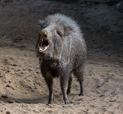
The collared peccary, also known as a javelina, is a small, sturdy hoofed mammal found throughout the southwestern United States, Central America, and large areas of South America. It is easily recognized by the pale band of fur that circles its shoulders and chest, giving it the “collared” appearance for which it is named. With coarse bristly hair, a compact body, and a strong sense of smell, the collared peccary is well equipped for life in deserts, scrublands, forests, and tropical regions.Diet plays a major role in its daily activities. Collared peccaries are omnivores that forage for roots, fruits, seeds, tubers, and a variety of plant matter. They also eat insects and small animals when available. Their powerful jaws allow them to crush tough vegetation and hard seeds that many other animals avoid. Water can be scarce in some parts of their range, so peccaries rely on moisture-rich foods and travel to reliable sources during dry periods.Social life is central to a collared peccary’s behavior. These animals typically live in small groups called bands, which can range from a few individuals to more than a dozen. Members of the band communicate through grunts, squeals, scent marking, and body language. They rest, travel, and forage together, and their close bonds help them stay safe from predators. Young peccaries learn the rhythms of group life by staying close to their mothers and following the daily movements of the band.When interacting with other animals, collared peccaries are a mix of cautious and confident. They share territory with deer, raccoons, birds, and many small mammals, usually without conflict. However, predators such as jaguars, pumas, coyotes, and large snakes pose a real threat. When alarmed, peccaries communicate danger through sharp vocalizations and may group tightly together to appear larger and more intimidating. While they generally avoid unnecessary fights, they can defend themselves with surprising force if cornered.Their presence influences the landscape in many subtle ways. By rooting for food they disturb the soil, which promotes new plant growth. Their feeding habits help disperse seeds from fruits they consume, spreading vegetation across their habitat. Through their daily activities, collared peccaries contribute to the structure and diversity of ecosystems, playing a small yet meaningful role in maintaining the balance of the environments they inhabit.
Saber tooth
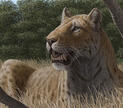
The saber tooth known as Smilodon gracilis was the smallest and earliest member of the famous saber-toothed cats. Despite its size, it was still a powerful predator with long, laterally flattened upper canines that gave the group its iconic name. Its body was built for strength rather than speed, with muscular forelimbs and a compact frame that allowed it to grapple prey with precision. Forest edges, open woodlands, and mixed environments provided ideal hunting grounds for this agile cat.Its daily life centered on ambush hunting. Smilodon gracilis relied on stealth, creeping close to unsuspecting prey before launching a short, explosive attack. Its strong forelimbs helped pin animals to the ground while its specialized canines delivered precise bites to vulnerable areas. Rather than chasing prey over long distances, it used cover and patience, traits that made it an efficient predator of ancient deer, small horses, and early camelids.Social behavior in Smilodon gracilis is not fully known, but fossil evidence suggests that saber-toothed cats may have lived in small groups or loose associations. If they did form social units, cooperation would have been valuable for protecting kills, raising young, and defending territories from larger predators. Juveniles likely learned hunting techniques by watching adults, gradually improving their stalking and grappling skills as they matured.Interactions with other animals were shaped by competition and caution. Larger carnivores such as early dire wolves, giant short-faced bears, and other saber-tooth species could threaten both kills and territories. Smilodon gracilis needed to balance boldness with awareness, defending its food when possible but retreating when outmatched. It shared its environment with numerous herbivores, and while it did not mix socially with them, their movements influenced where and when the cat chose to hunt.As a mid-sized predator, Smilodon gracilis played an important role in the ecosystems of early North America. By hunting smaller and medium-sized herbivores, it helped regulate prey populations and maintain ecological balance. Its presence also shaped the behavior of other predators, contributing to a dynamic and competitive landscape. Through its hunting strategies and interactions, this early saber-toothed cat left a lasting impact on the environments it once dominated.
Dire Wolf
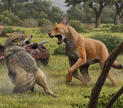
The dire wolf was one of the most iconic predators of the late Pleistocene, known for its powerful build and formidable presence. Heavier and more robust than modern gray wolves, it had strong jaws, thick limbs, and a muscular body designed for grappling large prey. Its broad skull and massive teeth allowed it to crush bone with ease, giving it a clear advantage when feeding on tough carcasses. Dire wolves thrived across a wide range of environments including grasslands, open forests, and plains.Daily life for a dire wolf centered on movement, cooperation, and constant search for food. These wolves targeted large herbivores such as ancient bison, horses, camels, and young mammoths when opportunities arose. Their hunting relied on stamina and teamwork rather than stealth or speed. Packs spread out to track prey over long distances, then worked together to exhaust and bring down animals much larger than themselves. Like modern wolves, they likely scavenged when needed, using their strong jaws to access marrow and bones left untouched by other predators.Social structure was essential to a dire wolf’s success. Packs were likely led by dominant individuals who maintained order, established territory, and guided group movements. Young wolves learned by observing adults and participating in cooperative hunts as they matured. Pack members groomed one another, shared food, and defended their territory as a unified group. These bonds strengthened their ability to survive in landscapes filled with competing carnivores.In the presence of other animals, dire wolves were confident yet strategic. They shared territory with giant short-faced bears, saber-toothed cats, American lions, and other powerful predators. Confrontations over kills were common, and dire wolves often had to defend their hard-earned meals from much larger rivals. With herbivores, their behavior was shaped by opportunity; they followed herds, watched for weak individuals, and took advantage of moments when prey became vulnerable. Their interactions helped shape the movements and alertness of nearly every species that lived alongside them.Dire wolves played a key role in maintaining ecological balance throughout the Pleistocene. By hunting large herbivores, they helped regulate prey populations and influenced migration patterns. As scavengers, they contributed to cleaning the landscape of carcasses, reducing disease risks and supporting nutrient cycling. Their powerful presence, complex social behavior, and adaptability made them dominant predators of their time, leaving a lasting legacy in the fossil record and in the story of North America’s ancient wildlife.
Beringian Wolf
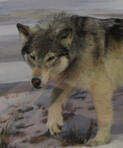
The Beringian wolf was a powerful Ice Age predator that lived in the cold northern regions of Alaska, Yukon, and parts of Siberia. It was a specialized form of the gray wolf, but noticeably more robust, with a broader skull, stronger jaws, and thick limbs built for life in harsh climates. Its dense fur and sturdy frame helped it navigate snow-covered landscapes where temperatures could drop far below freezing.
Daily life for a Beringian wolf revolved around endurance hunting and scavenging. These wolves targeted large Ice Age herbivores such as horses, bison, musk oxen, and occasionally young mammoths. Their powerful jaws allowed them to crush bone more effectively than many modern wolves, giving them access to valuable marrow that other predators struggled to reach. Seasonal migrations of prey shaped much of their movement, and they often trailed herds across long distances to find consistent sources of food.
Social dynamics within a Beringian wolf pack were essential for survival. Packs were likely led by experienced individuals who guided the group to hunting grounds and taught younger wolves how to track prey in challenging environments. Cooperation was vital during hunts, where each member played a role in overwhelming prey through stamina and coordinated effort. Pup rearing was a shared task, and young wolves learned important behaviors by watching their elders and practicing skills within the safety of the pack.
The Beringian wolf shared its frozen territory with many formidable animals. It coexisted with saber-toothed cats, scimitar cats, short-faced bears, and other large predators that often competed for the same food sources. Confrontations around carcasses were common, and Beringian wolves had to decide whether to defend a kill, work together to intimidate rivals, or move on to avoid injury. Around herbivores, they relied on strategy and patience, observing herds for signs of weakness or vulnerability before committing to a chase.
As a top predator, the Beringian wolf played a crucial role in Ice Age ecosystems. By hunting large herbivores and scavenging remains, it helped regulate prey populations and kept the landscape clean of decaying carcasses. Its activity shaped the behavior of other species, influencing migration patterns and alertness levels within prey herds. Through strength, social cooperation, and adaptability, the Beringian wolf became a dominant force in the northern Pleistocene world, leaving behind a legacy written in the fossils of the frozen north.
American Bison
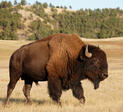
The American bison is one of the most iconic mammals of North America, known for its massive size, thick shaggy mane, and powerful, humped shoulders. As the largest land animal on the continent, it once roamed the Great Plains in breathtaking numbers, shaping entire ecosystems with its movements and grazing patterns. Its dark, woolly coat and curved horns give it an imposing appearance, yet its behavior is often calm and deliberate unless threatened or challenged.
Daily life for an American bison centers around grazing and movement. These animals feed primarily on grasses, roaming large distances to find fresh growth across prairies, plains, and river valleys. Their strong tongues and large, grinding teeth allow them to efficiently process tough vegetation. Seasonal changes influence their travel routes, especially during harsh winters when they use their heavy heads to sweep aside snow in search of food beneath the surface.
Social behavior is an essential part of bison life. They live in herds that can number from small family groups to massive gatherings during peak seasons. Cow calf groups tend to stick together, while bulls often form separate bachelor groups except during the breeding season. Within herds, individuals communicate through grunts, snorts, postures, and subtle body language. Young calves learn herd behavior by staying close to their mothers and following the rhythms of group movement and grazing.
In the presence of other animals, the American bison is generally tolerant but aware. Smaller herbivores such as pronghorn, elk, and deer often graze near bison herds, taking advantage of the paths and openings created by their constant movement. Predators like wolves and mountain lions pose a threat, particularly to calves or weaker individuals. When threatened, bison rely on group cohesion and their sheer size, forming protective walls around young or charging aggressively to drive off attackers. Their presence influences the distribution and behavior of many species around them.
The ecological impact of the American bison is profound. Their grazing patterns help maintain grassland health by preventing overgrowth of certain plants and encouraging the spread of native vegetation. Their hooves churn the soil, aiding seed dispersal and promoting new plant growth. Wallows shallow depressions created when bison roll on the ground, collect rainwater and provide habitat for insects, amphibians, and birds. Through their daily actions, bison shape the landscapes they inhabit and remain an essential symbol of the vast and vibrant ecosystems of North America.
Green Sturgeon

The green sturgeon is an ancient and powerful fish species found along the Pacific coast of North America, known for its armor-like plates and prehistoric appearance. With a long, torpedo-shaped body and rows of bony scutes running down its sides, it is built to endure strong currents and long migrations. Its olive-green coloration, pointed snout, and whisker-like barbels give it a striking and easily recognizable look. As one of the longest-living fish in the world, some green sturgeon can survive for more than seventy years.Daily life for a green sturgeon revolves around migration and feeding. These fish spend most of their lives in coastal marine waters but travel upriver to spawn in large rivers with swift, clean currents. Their diet consists mainly of bottom-dwelling invertebrates, including shrimp, clams, worms, and small fish. Green sturgeon use electroreceptors on their snout and sensitive barbels to detect prey buried in mud or sand, sweeping the riverbed or seafloor with deliberate, powerful movements as they feed.Social behavior is not a major part of green sturgeon life, as they do not form tight schools. Instead, they often travel alone or in loose groups that gather during migrations or in feeding areas. Their movements are driven by instinct, water temperature, and seasonal cues. Young sturgeon remain in freshwater for months before moving into estuaries and eventually the open ocean, learning to navigate changing environments as they grow.In the presence of other animals, green sturgeon are generally calm and unbothered. Because of their size, thick armor, and powerful swimming ability, few predators target healthy adults. Juveniles, however, may be hunted by larger fish, birds, and marine mammals. Green sturgeon share their habitats with salmon, seals, sea lions, sharks, and many bottom-dwelling species, usually without conflict. As long as food remains abundant, they coexist quietly within the diverse communities of rivers, estuaries, and coastal waters.Green sturgeon play an important ecological role by stirring up sediment as they feed, which helps recycle nutrients and maintain healthy river and coastal ecosystems. Their long migrations connect marine and freshwater environments, and their feeding behavior influences the distribution of small invertebrates. Although once widespread, green sturgeon populations have declined due to habitat loss, dams, and pollution, making conservation efforts essential to protect this ancient species and the ecosystems it supports.
Salmon

Salmon are remarkable fish known for their incredible life cycle, which takes them from the open ocean to freshwater rivers and streams where they were born. Their sleek, streamlined bodies make them powerful swimmers capable of navigating long migrations and fast-moving currents. Depending on the species, salmon range from silver and blue hues to vibrant reds and greens during spawning season, transforming dramatically as they prepare for their final journey upstream.Daily life for a salmon changes dramatically depending on its stage of life. Young salmon, called fry and smolts, spend their early months in freshwater, feeding on insects and small invertebrates while learning to avoid predators. As they grow, they migrate to the ocean where they spend several years feeding on fish, squid, and crustaceans. The ocean provides abundant food, allowing salmon to build the strength and energy reserves needed for their eventual return to their birth streams.Salmon do not form tight social groups like many other fish, but they often travel in loose schools during migrations. Their movements are guided by a combination of instinct and environmental cues such as water temperature, day length, and even the chemical scent of their natal river. This remarkable homing ability allows them to return with incredible precision, sometimes traveling hundreds or thousands of miles to reach the exact stream where they began life.Around other animals, salmon occupy a central and critical role in aquatic ecosystems. In the ocean, they share habitat with seals, whales, sharks, and seabirds, many of which rely on salmon as an important food source. In freshwater, bears, otters, eagles, and numerous fish species depend heavily on salmon runs. Although they do not interact socially with these animals, their presence shapes predator behaviour and supports entire food webs. Young salmon are vulnerable to many predators, while adults rely on speed, agility, and sheer size to evade threats.Ecologically, salmon are keystone species whose migrations enrich entire ecosystems. When they return to spawn and eventually die in freshwater, their bodies provide nutrients, such as nitrogen and phosphorus, that feed plants, insects, and microorganisms. These nutrients travel through whole forests and river systems, supporting everything from algae to large mammals. Through their incredible life cycle and migrations, salmon link ocean and river ecosystems, making them vital to the health and balance of the environments they inhabit.